AI Agents Are Revolutionizing E-Commerce: Why European Players Must Act Now

AI Agents: A Technological Revolution for E-commerce in Europe
In a world where e-commerce is constantly growing, AI agents are emerging as the backbone of the next major evolution. These digital entities are capable of interacting, learning, and anticipating consumer needs in unprecedented ways. By 2025, these tools promise to radically transform how online transactions are conducted. The role of European players is crucial in adopting this technological revolution and maintaining their competitiveness in the global landscape. AI agents don’t just perform basic tasks like product recommendations. They go far beyond that by personalizing every step of the purchasing journey. For example, they analyze past purchasing behavior to offer highly targeted and relevant suggestions, making each interaction unique. According to recent research, over 82% of e-commerce sites have already begun integrating this technology, not only to build customer loyalty but also to optimize payment processing and logistics. By prioritizing user experience, AI agents can accurately predict market trends and adapt accordingly. A Forbes report highlights how these entities will revolutionize e-commerce, making the purchasing process not only smoother but also more intuitive. One illustrative French company, for example, was able to increase its sales by 20% by integrating AI agents into its business strategy, demonstrating the direct impact of this technology. Europe, with its rich heritage in digital strategy and innovation in commerce, is poised to revolutionize e-commerce. must embrace this digital transformation. Faced with American and Asian competition, the rapid and effective adoption of AI agents will allow companies to remain at the forefront of the industry. An article from Maddyness highlights the importance for European companies to position themselves before they fall behind. Discover how AI agents are transforming e-commerce and why European players must adopt these innovative technologies without delay to remain competitive. Case Studies of Impact on European E-Commerce Concrete examples of the use of AI agents in e-commerce
demonstrate their transformative potential. Leading companies, such as Carrefour and Zalando, are already leveraging AI agents to optimize their supply chains and personalize the customer experience. A report from
Furthermore, the digital transformation driven by artificial intelligence is enabling European retailers to respond more quickly to consumer demands. Integrating AI agents into platforms like Shopify offers increased flexibility for businesses looking to adapt to changing needs. An overview from Shopify’s blog highlights how these technological advancements are redefining perceptions of logistics and inventory management. In addition, with artificial intelligence that learns and evolves continuously, brands can offer highly accurate product recommendations to their customers, turning casual shoppers into loyal customers. This capability is invaluable, especially in a saturated market where customer retention is more challenging than ever. An article from Airagent Explore how these practices ensure not only increased competitiveness but also greater customer satisfaction.https://www.youtube.com/watch?v=imLGXESWjJ0 How AI Agent Integration Is Shaping the Future of European Commerce In Europe, the adoption of AI agents is no longer an option but a necessity for any player wishing to remain relevant in e-commerce. One of the main advantages lies in the ability to orchestrate a multitude of data to create fully personalized customer interactions. By integrating these advanced technologies, brands can easily anticipate their consumers’ needs, thus increasing their efficiency and conversion rates.

One of the major challenges remains the effective implementation of neural networks to not only optimize each interaction but also remain compliant with European data privacy regulations. With a legislative framework often stricter than in other regions, it is vital for companies to navigate between technological innovation and compliance. A report by CTO-Externe echoes these concerns, highlighting the importance of a judicious balance between digital transformation and protecting consumer rights. https://www.youtube.com/watch?v=pY-06mqyqMg The Challenges of European Competitiveness in the Face of AI Agents As in any technological revolution
AI agents present challenges but also offer unprecedented opportunities, especially in Europe. To remain competitive, Europe must not only invest heavily in these technologies but also train its workforce to adapt to market changes. An article in Mondetech discusses the need for such adaptation to ensure European businesses are not left behind. For small and medium-sized enterprises (SMEs), often perceived as the most vulnerable to these changes, integrating AI agents can be a significant driver of growth. The recent agreement between Walmart and ChatGPT serves as a lesson for these companies, showing them how technological innovations can disrupt the status quo. Case studies demonstrate how some SMEs have leveraged these tools to outperform their more established competitors.In conclusion, the adoption of AI agents by European retailers should not be seen as mere modernization, but as a genuine necessity to meet the challenges of tomorrow. Collaboration between governments, technologists, and businesses is essential to fully capitalize on this development. Comparative Table of AI Agent Adoption in Europe
Country AI Agent Adoption (%) Main Sectors
Germany
75% Automotive, Finance 25% Increase in Online Sales France68%
Fashion, Logistics Increased Customer Loyalty Italy
50% Tourism, Food 30% Reduction in Operating Costs Spain 62% Electronics, Retail Improved User Experience
https://mondetech.fr/pourquoi-les-agents-ia-revolutionnent-le-business/
Read next
 E-commerce news
Billionaire Stanley Druckenmiller strengthens his position by acquiring more shares in two key players in e-commerce and technology.
Renowned investor Stanley Druckenmiller, known for his bold financial strategy, is further strengthening his position in
 E-commerce news
E-Commerce Market Analysis: Understanding the Rise of Deferred Payment in 2025, with profiles of key players such as Bread Financial, Paypal, Klarna, Affirm, and many more.
The e-commerce market continues to grow at breakneck speed, profoundly transforming consumer purchasing methods and beha
 E-commerce news
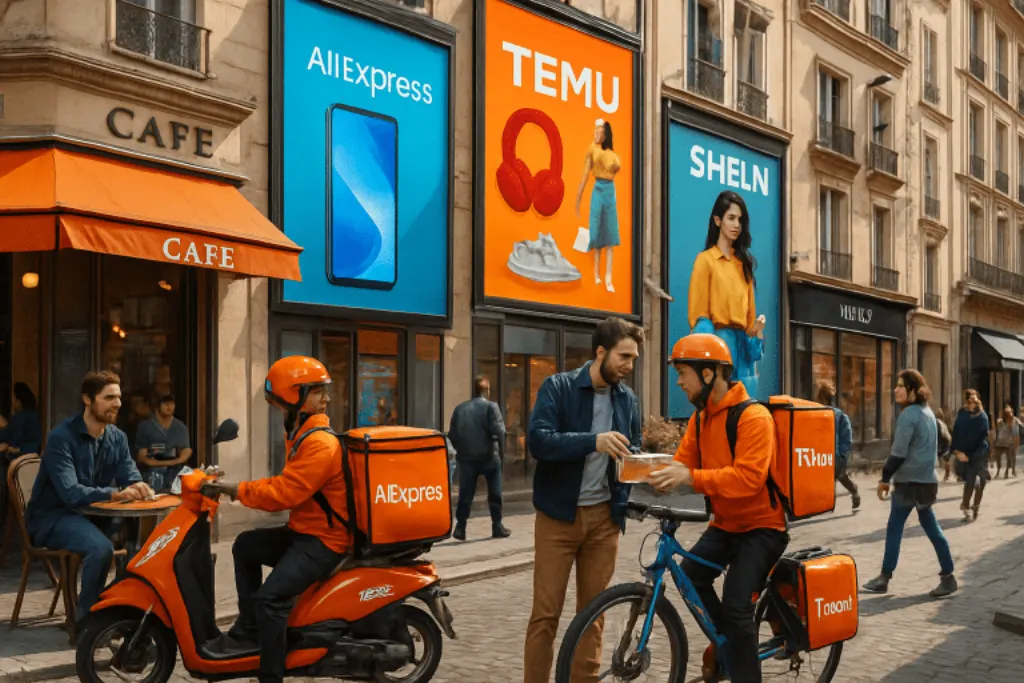
Trade war aftermath: Chinese e-commerce firms step up efforts to woo European consumers
At the heart of global tensions, the trade war between China and the United States has reshaped the international econom
 E-commerce news
Shein in the sights of European authorities: investigation into compliance with consumer laws in the fight against e-commerce
Shein, the Chinese fast fashion giant, is currently under the spotlight of European authorities. The heart of the debate