The partnership between Target and Shopify: Limited impact on the online market
Contents6
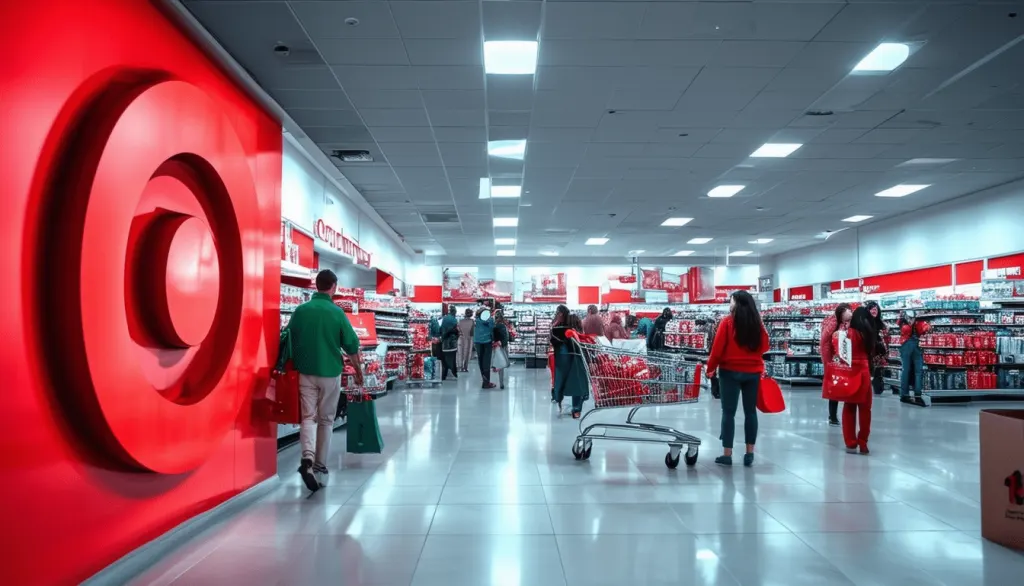
Last June, Target collaborated with Shopify to expand its online marketplace. Despite this promising alliance to integrate Shopify sellers into its network, the results obtained have been limited. This article explores this partnership, highlighting its initial ambitions, Target’s real-world market impact, and the highly selective curating strategy adopted by Target.
An ambition to strengthen the digital presence
By partnering with Shopify, Target aimed to enrich its marketplace digital, Target Plus, with a diverse selection of products. The alliance was intended to allow Target to differentiate itself in the online marketplace by integrating popular sellers from the Shopify platform, while providing the ability for some sellers to see their products physically on shelves in Target stores. This approach aimed to create a bridge between online commerce and physical points of sale.
Mixed results
Despite clear potential, the partnership between Target and Shopify has not resulted in significant growth in the number of sellers on Target’s marketplace. In fact, four months after the initiative, only 500 new sellers joined Target Plus. Compared to the millions of brands using Shopify, this appears small. This limited contribution raises questions about Target’s selection criteria and sellers’ perception of the value of such integration.
Strict selection criteria
Target has always been known for its careful selection of sellers. This partnership has not changed this approach. Indeed, Target continues to base its choices on demanding criteria that go beyond simple compliance requirements, such as the harmonious insertion of offers into its overall range of products. This strategy, although limiting in terms of seller volume, allows it to maintain a distinct positioning compared to giants like Walmart and Amazon.
Deliberately restricted positioning
Target has decided to manage a marketplace deliberately restricted and highly polished, unlike the massive approaches observed among its competitors. Currently, Target has around 1,325 sellers on its platform, which is very limited compared to the colossal marketplaces of Amazon and Walmart. This intentional difference allows Target to offer a more affordable and less overwhelming selection for consumers.
The future of partnership: what are the challenges?
With this partnership, Target has demonstrated its desire to stand out in the online market while strengthening its link between digital and physical. However, to fully optimize this alliance with Shopify, Target may need to consider relaxing its selection criteria or improving the attractiveness of its marketplace for Shopify sellers. By adapting its strategy, Target will potentially be able to increase its impact on the digital market and strengthen its position against the e-commerce giants.
Impact of the Partnership between Target and Shopify
- Limited Growth:
Only 500 new sellers added despite the partnership. - Selective Marketplace:
1,325 sellers on Target, far fewer than Amazon and Walmart. - Differentiated Position:
A carefully selected choice of products, unlike the multitude of products on other platforms. - Progressive Integration:
Future Shopify products in Target stores, not immediately visible online. - Priority to Consistency:
Sellers must align with Target’s assortment to be accepted.
Read next
 Shopify
What the unified partnership between Shopify (SHOP) and Visualsoft means for shareholders
In a constantly evolving retail landscape, the unified partnership between Shopify and Visualsoft is proving to be a maj
 Shopify
Mirakl strengthens its partnership with Shopify by launching the Mirakl Connector for Shopify
In July 2025, two e-commerce giants, Mirakl and Shopify, strengthened their strategic partnership to accelerate the laun
 Shopify
Coinbase Expands Services Through Shopify Partnership for Stable Cryptocurrency Payments
In a resolutely forward-looking movement, Coinbase and Shopify are jointly making a new digital footprint. By partnering
 Shopify
OpenAI Launches Shopping Feature in ChatGPT After Rumors of Major Partnership with Shopify
In a technological era where every innovation redefines our daily habits, OpenAI is making a big splash by unveiling a n