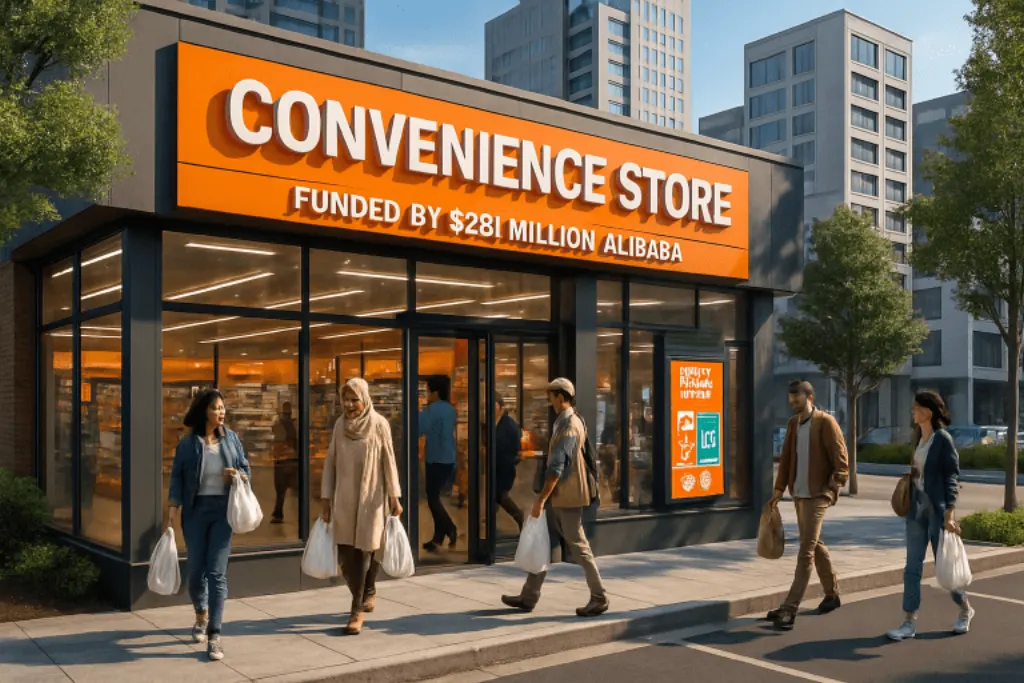
Alibaba strengthens its commitment to instant commerce with a $281 million convenience store project
Contents5
Chinese e-commerce giant Alibaba Group Holding recently announced an impressive investment of 2 billion yuan (approximately $281 million) to bolster its commitment to instant commerce. In collaboration with existing convenience stores, Alibaba aims to modernize these outlets by integrating advanced technologies. This strategic initiative focuses primarily on upgrading the digital infrastructure of partner stores across China. The goal is to offer customers a fast and seamless shopping experience, including 30-minute delivery services. The potential impact on China’s e-commerce ecosystem is significant, especially compared to giants like JD.com and FamilyMart. Digital Transformation of Convenience Stores in China: By partnering with stores under the Taobao brand, Alibaba is focusing on integrating digital solutions to modernize retail. Instead of creating new stores, the idea is to revitalize existing ones using the Aoxiang platform. This allows them to leverage information and management technologies, providing supply chain support through Alibaba’s national wholesale platform, 1688.com. As a result, stores can offer a wider range of products while benefiting from optimized logistics for rapid restocking. Another notable feature of this transformation is the implementation of a « one-step shopping » system, which can be complemented by 30-minute delivery—a significant development in the convenience store sector. This initiative responds to growing consumer demand for quick access to a variety of products, from groceries to everyday necessities.
In collaboration with existing chains such as Auchan Minute, Carrefour Express, and Freeshippo, Alibaba is helping to redefine the convenience store shopping experience in China. This type of digital transformation not only meets modern customer demands but also positions Alibaba as a leader in instant commerce, competing with international rivals like RedNote and Meituan.
Discover how Alibaba is investing $281 million in an ambitious convenience store project, reinforcing its commitment to instant commerce and transforming the convenience store shopping experience in China. The Challenges of Modernizing Local Retail **While the idea of transforming existing stores into advanced digital entities is tempting, it presents a number of challenges. First, deploying new technologies requires extensive staff training to maximize their effectiveness. Furthermore, ensuring a fast and continuous supply chain is a major challenge, necessitating a flawlessly coordinated supply chain.**By integrating AI technology and digital innovations, Alibaba must also address concerns regarding customer data protection, a significant issue in today’s global e-commerce landscape. However, with its vast experience and resources, Alibaba appears well-equipped to overcome these obstacles.
Integration of AI technologies for data analysis
Supply chain optimization for increased responsiveness Continuous training provided for change managementSo, despite these challenges, Alibaba’s journey toward convenience store modernization may well represent a lasting evolution for global retail, introducing new standards for customer experience. **https://www.youtube.com/watch?v=BRXNscd0zME**Impact of Alibaba’s commitment to the Chinese economy Alibaba’s $281 million investment announcement represents a major boost to the Chinese economy. By partnering with more than 200 cities across China, this project has the potential to revitalize local commerce, encourage new job opportunities and stimulate economic growth. Convenience stores, leveraging Alibaba’s advanced digital capabilities, could see increased competitiveness against giants likeJD.com And Suning .Alibaba envisions a complete overhaul of the consumer experience, enabling every purchase to turn into an opportunity for digital interaction. This strategy encompasses personalization tools that make each transaction unique. Furthermore, by integrating agile logistics solutions, Alibaba promises not only faster but also more efficient deliveries.

Number of partner stores
Expected economic impact
Hangzhou 150 Increase in local commerce by 25%
- Nanjing
- 120
- Creation of 5,000 jobs
Shanghai
Revenues up 30%
Interestingly, Alibaba is not operating alone in this direction. With competitors such as FamilyMart And EasyGowho stand ready to adopt similar strategies, convenience retailing in China is set to experience an unprecedented transformation. This strategic initiative launched by Alibaba aims not only to boost the economy, but also to ensure that the brand remains innovative and competitive in a rapidly changing global market.
Comparison with competitors in the sector
The rapid evolution of Alibaba’s technology infrastructure has enabled the development of solutions that go far beyond just offering rapid commerce technology. Through the digitization of convenience stores and the integration of on-demand delivery services, Alibaba is consolidating its position in the sector thanks to a double promise: speed and efficiency. As part of this, Alibaba has deployed innovative digital solutions, including the use of data to predict consumption trends and intelligent inventory management. This translates into an unprecedented level of responsiveness, which consumers perceive through continuous product availability. Service Innovative impact Competitive advantage
30 minute delivery
Increases customer satisfaction
- Reduces waiting and improves the experience Digital technologies
- Optimizes inventory management Avoid stock shortages
- AI Platforms Personalize customer recommendations
Improves cross-selling As we move forward into the era of instant commerce, Alibaba is poised to transform everyday shopping experiences into an innovative digital journey. Faced with similar initiatives led by competitors like Amazon

Walmart
, Alibaba’s commitment to innovation goes beyond just the pursuit of profits. It is a commitment to revolutionize the entire sector, ensuring that by 2025 it is more than ready to meet future challenges.
https://www.rankthis.com/alibaba-e-commerce/ /alibaba-et-amazon-quel-geant-de-le-commerce-possede-le-plus-de-potentiel-avant-les-resultats-du-deuxieme-trimestre/
Read next
 E-commerce news
Alibaba strengthens its e-commerce chief while reducing its key leadership team
With a palpable transformation momentum, Alibaba Group is undertaking a substantial reorganization within its leadership
 E-commerce news
The instant payment system Pix is poised to conquer half of the Brazilian e-commerce market by 2028
Understanding Pix’s Success in the World of Digital Payments The instant payment system Pix, launched by the Central Ban
 E-commerce news
OpenAI Instant Checkout: AI and Long-Term E-Commerce, What’s the Difference?
The advent of artificial intelligence is revolutionizing e-commerce by facilitating more sophisticated shopping experien
 E-commerce news
Chinese e-commerce giants ignore regulatory risks to pursue price wars in instant sales
Fierce competition in China's e-commerce sector shows no signs of abating, particularly in the booming "instant sale" sp