Blinkit announces tough competition ahead in Indian quick-commerce market
Contents12
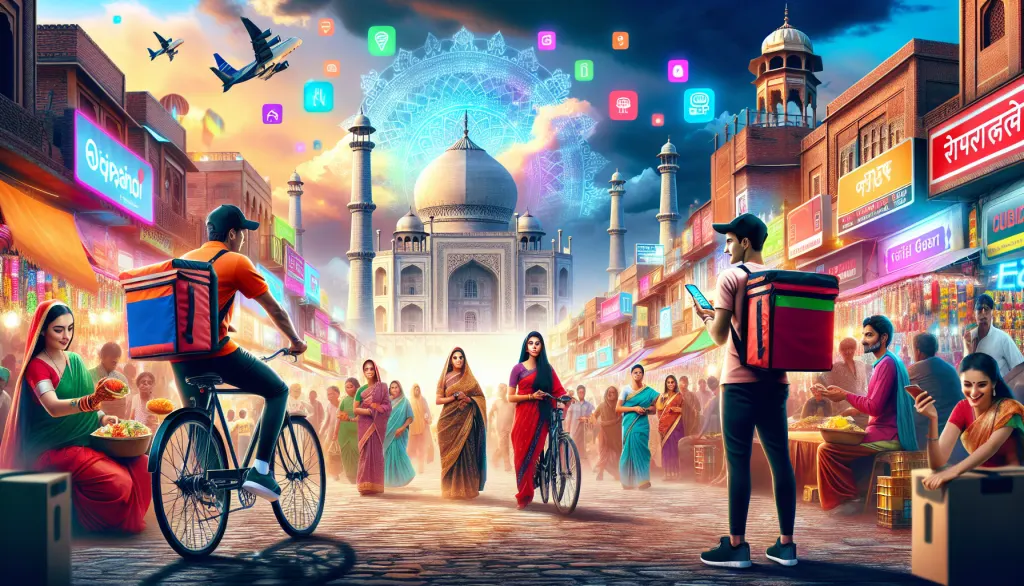
The meteoric rise of quick commerce in India seems unstoppable. With rapid expansion and intensifying competition, Zomato’s Blinkit plans to scale up its operations despite anticipated losses. The race to dominate this dynamic market is intensifying with the increase in the number of dark stores and significant investments to capture the attention of consumers.
Expansion has accelerated in recent months, with Blinkit beating forecasts with more than 1,000 stores. Within a year, the company could have 2,000. However, this rapid growth is not without costs. Expenses on rental of premises and tempting discounts led to a loss of Rs 1.03 billion in the last financial quarter.
The current context of quick-commerce in India
The Indian market quick commerce has evolved exponentially. Businesses are scrambling to adapt to this new standard of delivery in less than 15 minutes, driven by growing consumer demand for unprecedented convenience. This rapid evolution has led companies like Blinkit, at the head of this expansion, to take a risky but potentially very profitable path.
Blinkit’s strategy
Blinkit opted for an aggressive approach. Rapidly expanding, it aims to create an extensive network of strategically located urban stores to meet the demands of its customers. This strategy, although costly, is considered essential to conquer the Indian market, where every second counts.

Challenges encountered
Although Blinkit is growing rapidly, it faces many challenges. The costs associated with acquiring stores in desirable areas, increased competitive pressure and reduced margins due to aggressive discounting pose serious economic challenges. To compensate, Blinkit must guarantee a high enough order volume to break even.
Competition in the Indian market
The competitiveness of the Indian fast trade market continues to grow. With players such as Swiggy, Amazon, and the new entrant Blinkit, the competition to capture consumer attention is heating up. These companies are investing heavily in developing new infrastructure and building customer loyalty through bold discounts and loyalty programs.
The rise of Zepto and other competitors
Zepto, positions itself as one of Blinkit’s main rivals. With robust financial support, the company was able to create a network of distribution points faster than expected, quickly capturing a significant share of the market. At the same time, Swiggy continues to grow and innovate, leveraging its expertise in logistics and fast delivery.
Levers of differentiation
To gain traction, businesses need to offer more than just discounts. They explore various areas, such as improving the user experience, diversifying the products offered, and continuously optimizing their logistics layer. These elements are essential to retain customer loyalty that is ever more demanding in terms of speed and quality.
The impact on traditional e-commerce
The advent of quick commerce inevitably has a impact on traditional e-commerce. While these new models offer almost instantaneous deliveries, incumbent players must adapt to avoid losing their market share in a changing environment.
The adaptation of e-commerce giants
Amazon and Flipkart, two e-commerce behemoths in India, have quickly adapted their strategies to integrate fast delivery services. Flipkart has already established more than 100 urban stores, while Amazon is beginning its own trials of rapid delivery services. These changes represent tangible proof of the importance of aligning with these new market dynamics.
Redefining logistics
To compete with these newcomers, companies must adapt their logistics models, optimizing their network of dark stores and investing more in advanced inventory management and delivery technologies. These initiatives help improve efficiency and provide more reliable deliveries.
Future prospects for quick-commerce
As the quick-commerce market continues to grow at a breakneck pace, its outlook is promising. With the growing consumer base in India seeking extreme convenience, players who can offer the best balance between speed, price and user experience will dominate the industry in the long run.
The expected innovations
One of the major expected developments is the increased integration of new technologies, such as AI and drones for deliveries. These technologies could reduce costs while improving delivery times. The technological ecosystem thus becomes an inseparable element of the success of these companies.
Challenges to overcome
Despite this optimistic outlook, obstacles remain. Inventory management, maintaining quality of service and fighting for market share are among the major challenges. Companies must also face increasing international competition, requiring perpetual adaptation strategies.
- Blinkit: Strategies and Expansion
- Impact on the e-commerce in India
- Role of New Technologies
- Fierce Competition in the Indian Market
Read next
 E-commerce news
The Generation Z market: how Indian youth are redefining e-commerce
Indian youth, often referred to as Generation Z, are revitalizing the e-commerce landscape. With a resolutely avant-gard
 E-commerce news
China’s market regulator announces end of three-year ‘rectification’ period for e-commerce giant Alibaba
THE Chinese market regulator recently announced the end of the three-year "rectification" period imposed on the e-commer
 E-commerce news
BlinkIt and Swiggy: India mandates the end of 10-minute delivery times
BlinkIt and Swiggy: Revolution and Regulation in India’s Ultra-Fast Delivery The race for ultra-fast delivery in India h
 E-commerce news
Alibaba (BABA): Can it maintain its momentum in the face of increasingly fierce e-commerce competition?
Alibaba is at the heart of the e-commerce world, a commercial behemoth that has left an indelible mark on the global tec