Kmart, Target and Bunnings CEO slams Chinese e-commerce giants Shein and Temu: ‘Unfair’
Contents5
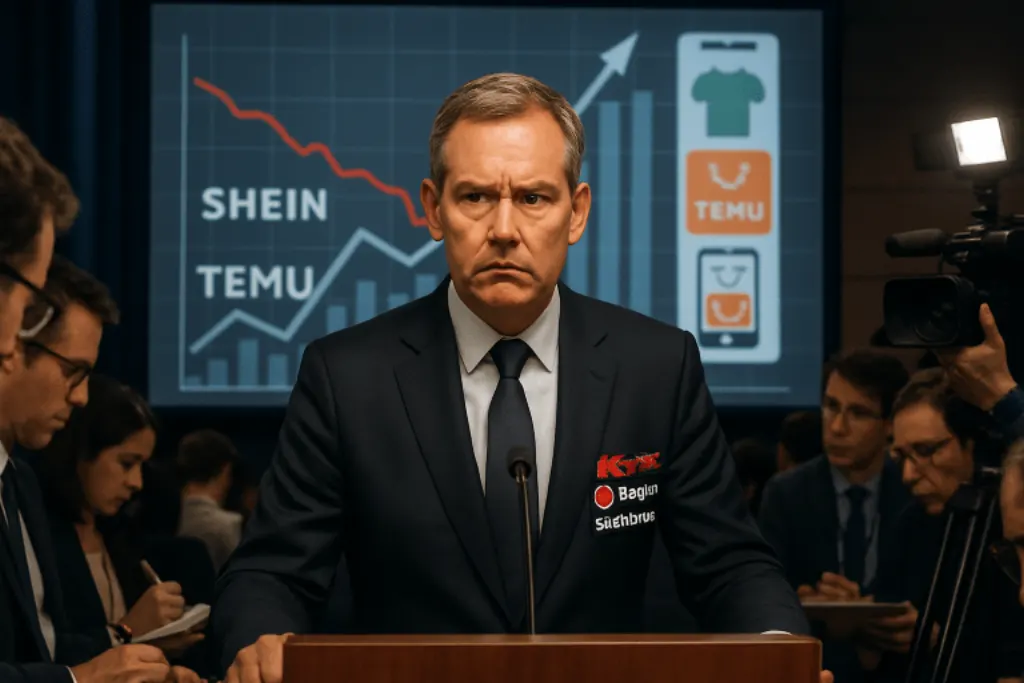
In a global context where e-commerce is taking on unprecedented proportions, Chinese giants such as Shein and Temu are now facing serious criticism from traditional retail players in Australia. The CEOs of Kmart, Target, and Bunnings are speaking out against what they consider unfair competition from Chinese e-commerce platforms. These companies, known for their unbeatable prices, are capturing a significant share of the local market, to the detriment of traditional retailers. Increasingly, voices are calling for fair competition rules, highlighting the inadequacy of current regulations for the realities of a globalized market.
A Market Disrupted by the Invasion of Chinese Giants
In an Australia in 2025, where the retail landscape is undergoing rapid change, the emergence of Chinese e-commerce giants Shein and Temu has sent shockwaves. Their rapid growth has disrupted the market balance, shaking the foundations of established businesses for decades. These two platforms have captured a large audience in Australia thanks to their unbeatable prices, leading to a significant customer erosion for local brands like Kmart, Target, and Bunnings.
In fact, a recent study conducted among 1,100 customers revealed that 77% of them had purchased a product through Temu or Shein in the past year. This figure illustrates the magnitude of the challenge facing Australian retailers. They suffer from a lack of price competitiveness. How can they compete with giants that evade many of the taxes and regulations they must comply with?
**Also worth noting:**Shein and Temu’s ability to operate in low-tax jurisdictions gives them an undeniable market advantage. This asymmetry calls into question the very foundations of fair trade and raises concerns about the long-term economic impact on Australian businesses.

Different approaches between direct selling and global e-commerce
Traditional retailers, such as Kmart and Bunnings, must comply with strict tax and employment regulations. These obligations run counter to the aggressive strategy of the Chinese giants. In reality, the latter take advantage of their opaque system to circumvent certain taxes, distorting competition. Wesfarmers CEO Rob Scott points out that the Australian regulatory framework predates the rise of e-commerce, posing a barrier to local retailers. Faced with this situation, he advocates for legislation adapted to the current reality so that all players can operate on an equal footing.
https://www.youtube.com/watch?v=CciLrQikcZw In short, while Australian consumers benefit from these low prices, the situation exacerbates tensions between retailers. Higher taxes and increased economic pressure are jeopardizing many local jobs and widening the gap between the two business models.Consequences for the Australian Labor Market
Many local businesses
are suffering from customer desertion, leading to job losses and growing economic uncertainty.
Conversely, these same platforms, which create few local jobs, are taking full advantage of loopholes in the Australian tax system. The situation is all the more worrying given that some executives, such as Gerry Harvey, are calling for a government investigation into the business practices of Shein and Temu. He told the media that these platforms directly undermine local brands, adding that an investigation is essential. For Harvey, it is imperative to determine whether these practices are causing lasting harm to the country’s economy. In response to these dynamics, some companies are seeking to reinvent themselves. Kmart, for example, is focusing on innovation and sustainable development to re-attract customers. Despite this, competition remains fierce, as the very essence of the products offered by Shein and Temu is different. Aspects
Shein & Temu
Australian Retailers
Prices
However, this proposal faces some resistance. While consumers are taking advantage of low prices during this difficult economic period, many may oppose potential price increases resulting from higher taxes for Shein and Temu.
Find out why the CEOs of Kmart, Target, and Bunnings are criticizing Shein and Temu for unfair competition. Analysis and challenges of e-commerce facing Chinese giants. Preparing for a possible backlashThe implementation of new regulations could also be followed by a shift in investment from Chinese giants. Rather than lose their competitive advantage, they could choose to lobby governments or relocate their operations to other, more welcoming markets. This situation aligns perfectly with recent changes observed in the global landscape
following the US government’s 2023 decisions
to impose stricter tariffs on Chinese imports, directly impacting Temu and Shein.

Stricter regulations
Fair competition
In this context, Australia could see a similar transformation. However, the effects on employment and local businesses remain uncertain. Local retailers will likely need to equip themselves with innovative strategies to attract and retain customers. The future of e-commerce in Australia Recent developments point to a decisive turning point in the impact of online platforms on local economies. As Shein and Temu continue to welcome new users, local players have no choice but to redouble their creativity to preserve their survival.
- It is in this climate that a number of retailers are considering closer cooperation
- with local platforms to pool resources and reduce operational costs. The adoption of innovative technologies, such as artificial intelligence and advanced logistics solutions, is another avenue being explored.
- At the same time, consumers are evolving, with greater environmental and social awareness. These indicators suggest that a share of purchases could be refocused on locally responsible companies. This is the case for Carrefour, which is advocating a « Trump-style tax » on imports to support the local economy. https://www.youtube.com/watch?v=Pa3uLQo-aPw
Ultimately, this combination of factors could force giants like Shein and Temu to revise their global strategies to align with new consumer expectations and local regulations, thus ensuring fairer competition that benefits the entire industry.
/la-chine-lance-une-enquete-sur-kuaishou-pour-son-commerce-electronique-en-direct/
Read next
 E-commerce news
Chinese e-commerce giants Temu and Shein are strengthening their grip in Africa while Jumia is withdrawing from a new African market
Chinese Giants and the African E-commerce Landscape The e-commerce sector in Africa is undergoing a major transformation
 E-commerce news
China-founded e-commerce giants Temu and Shein announce price increases due to tariffs
E-commerce platforms Temu and Shein, well known for their very attractive prices, recently announced an imminent price i
 E-commerce news
US tariffs a major concern for Chinese sellers on Shein, Temu, TikTok Shop and Amazon
In 2025, US tariffs have become a growing concern for Chinese sellers operating on platforms such as Shein, Temu, TikTok
 E-commerce news
L’UE instaure une taxe de 3 € sur les petits colis e-commerce : un coup dur pour Shein, Temu et AliExpress
Impact de la nouvelle taxe de l’UE sur les sites e-commerce À partir du 1er juillet 2026, l’Union européenne introduira