Sezzle Inc. files antitrust lawsuit against Shopify
Contents4
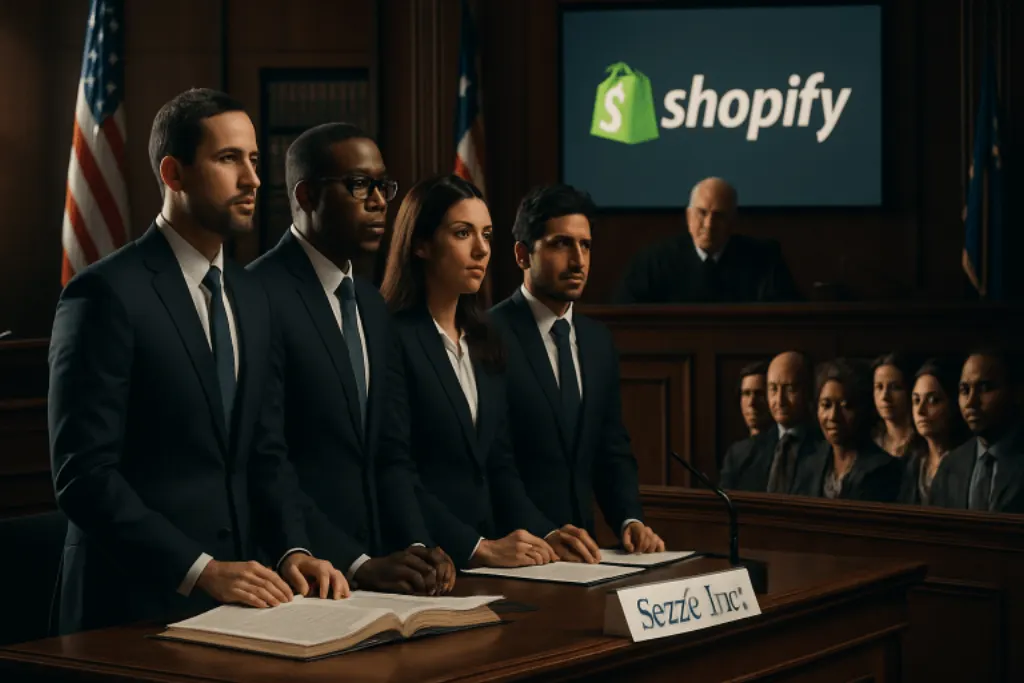
Sezzle Inc., a leading fintech company, recently shook the industry by filing an antitrust lawsuit against Canadian giant Shopify. The lawsuit, filed on June 9, 2025, alleges that Shopify engages in monopolistic practices with its buy-now-pay-later service options on its e-commerce platform. While Sezzle hopes to obtain an injunction to stop these anticompetitive practices, the lawsuit could redefine the power dynamics in the world of digital commerce. Despite the legal tensions, Sezzle appears to be maintaining a strong financial path, strengthening its guidance for fiscal year 2025.
Related reading : Shopify works to end lawsuit against Sezzle
Related reading : Shopify asks court to dismiss Sezzle lawsuit
Sezzle’s Allegations Against Shopify: A Battle for Competition
Sezzle Inc., a fast-growing fintech company, recently filed an ambitious lawsuit against Shopify Inc., a leading e-commerce company. This action seeks to denounce Shopify’s anticompetitive practices. According to Sezzle, Shopify allegedly abused its dominant position by restricting access to Sezzle’s « buy now, pay later » services, in favor of its own internal solutions. Sezzle’s ambition with this action is twofold: not only is the company seeking an injunction that would stop these anticompetitive practices, but it is also seeking substantial damages, which, under current federal law, could be tripled. This action reflects a growing trend among tech companies to oppose giants perceived as abusing their position to limit competition. https://www.youtube.com/watch?v=0vTk9phWraU
Interestingly, despite the allegations, Sezzle reported that revenue from the Shopify platform represented less than 5% of its total revenue in the first quarter of 2025. This demonstrates its relative financial independence from Shopify, reinforcing its position as a neutral plaintiff acting on behalf of commercial justice. ElementSezzle
Nature of Business
Procès antitrust contre Google : le géant de la publicité en ligne une nouvelle fois face à la Justice américaine https://t.co/YEzq0oYyXG
— Freenews (@FreenewsActu)

businesses
tech companies are facing. For example, many companies like Meta, Google, and Amazon have already faced similar accusations, prompting discussions about regulating Big Tech. In the case of Shopify, the issue raised by Sezzle is not limited to payments issues, but is also part of a broader trend where digital giants are accused of stifling innovation by restricting third-party access to their platforms.
Redistribution of power on e-commerce platforms. Potential overhaul of the business policies of large tech companies. Inspiring other startups to challenge practices deemed unfair. In short, the Sezzle vs. Shopify case fits perfectly into an era where the tech industry is being challenged to better ensure that business practices remain fair and accessible to all. This could very well inspire a new wave of antitrust litigation.
Learn how Sezzle Inc. is filing an antitrust lawsuit against Shopify, raising questions about competition and business practices in the online payments industry.
- Sezzle: An Emerging Player in the Digital Payments Ecosystem
- Sezzle has established itself as a pivotal player in the world of digital payment solutions, positioning itself as a transparent and inclusive alternative to traditional players. By offering point-of-sale financing options and digital payment services, Sezzle connects millions of consumers to a global network of merchants.
- Sezzle’s uniqueness lies in its mission of transparency.
and inclusion, enabling consumers to better manage their finances while achieving financial independence. Sezzle’s model is geared toward an easy-to-use platform, creating a harmonious symbiosis between user convenience and service efficiency. Thanks to its continued growth, Sezzle now boasts a market capitalization of $4.4 billion, significantly increasing its visibility in the industry. The company has also been favored by very positive forecasts, with analysts proposing a price target of $19.83 per share. This demonstrates the general confidence in Sezzle’s potential to innovate and adapt to market challenges. AspectSezzle’s Characteristics

Related reading : The Deferred Payment Battle: Sezzle Accuses Shopify of Bending the Rules in Favor of Its…
$4.4 Billion
Target Audience
Next Generation Core Values Transparency, Inclusion, Ease
Capitalizing on its strength of character and founding principles, Sezzle continues to forge its path in a constantly evolving sector, integrating the world of fintech with an ethical and modern approach.
Sezzle Inc. filed a lawsuit against Shopify, alleging anticompetitive practices. Discover the details of this case, which could impact the e-commerce landscape and the relationship between payment companies and online sales platforms. Competitive Strategies in a World Dominated by Digital Giants Faced with the dominance of giants like Shopify, Amazon, and other major retailers, emerging companies often have to balance innovation, agility, and legal prudence. The strategies adopted by companies like Sezzle offer an intriguing glimpse into how smaller players can navigate this complex maze.
Faced with competitive challenges, new businesses often need to adopt various means to stand out:
Adopting unique and innovative business models. Engaging with their consumer base to obtain constructive feedback. Investing in emerging technologies to anticipate digital developments.
Legal adversity certainly doesn’t hinder innovation. On the contrary, it encourages these entities to redouble their efforts to explore new opportunities and embrace a disruptive technological future.

Read next
 Shopify
Shopify works to end lawsuit against Sezzle
Shopify, one of the pillars of global e-commerce, is now in the spotlight, but for reasons it would prefer not to. Sezzl
 Shopify
Shopify asks court to dismiss Sezzle lawsuit
In a recent legal twist, Canadian e-commerce giant Shopify has asked a U.S. judge to dismiss a lawsuit filed by Sezzle,
 E-commerce news
Nebraska Attorney General files lawsuit against Chinese e-commerce platform Temu
Nebraska Attorney General Mike Hilgers is in the legal spotlight with a new case that is capturing the attention of inte
 Shopify
The Deferred Payment Battle: Sezzle Accuses Shopify of Bending the Rules in Favor of Its Own Payment Option
In a case that has shaken the e-commerce world, the American startup Sezzle is accusing Shopify, the Canadian e-commerce