Shopify works to end lawsuit against Sezzle

Contents5
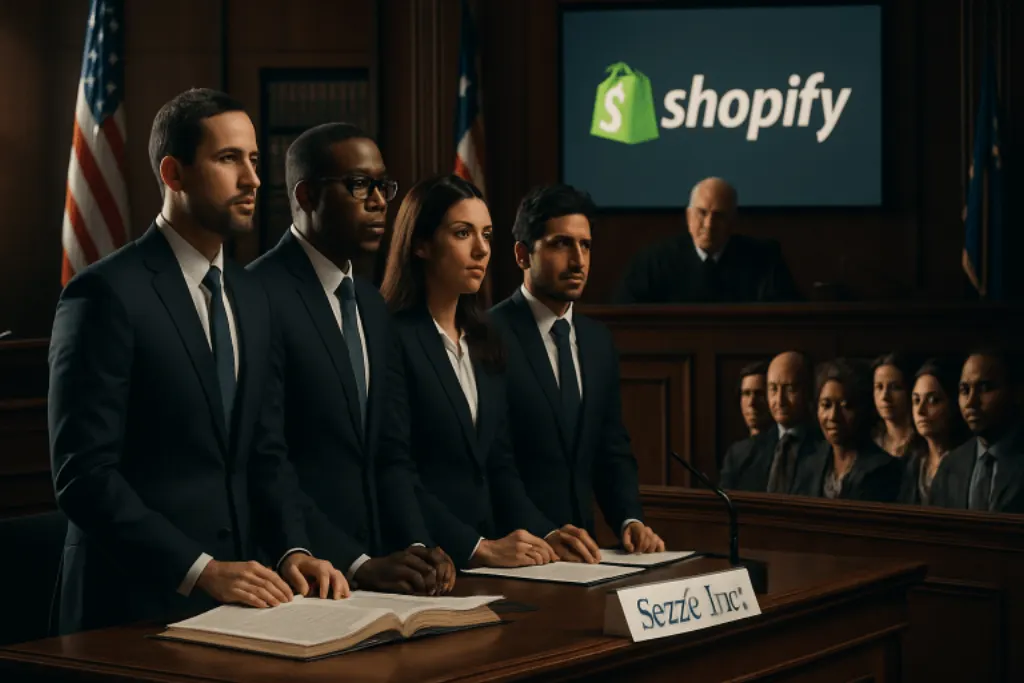
Shopify, one of the pillars of global e-commerce, is now in the spotlight, but for reasons it would prefer not to. Sezzle, a pioneer in the buy now, pay later (BNPL) fintech space, has filed an antitrust lawsuit against the Canadian giant. The complaint, filed in June 2025, accuses Shopify of engaging in anticompetitive practices by favoring its own BNPL service on its vast international marketplace. PayPal, Stripe, Klarna, Afterpay, Adyen, Affirm, Mollie, and Square are all industry players closely monitoring the case, as its repercussions could restructure the BNPL ecosystem. As tensions mount between the two companies, Shopify is desperately trying to find a favorable outcome while continuing to dominate the global market. Sezzle Inc. Files Antitrust Lawsuit Against Shopify: The Issues
The legal battle between Shopify and Sezzle is anything but an ordinary one. Minneapolis-based Sezzle accuses Shopify of manipulating the payment process in a way that disadvantages BNPL services other than its own. Since launching its BNPL offering, Shop Pay Installments, in June 2021, Shopify has been accused of « manipulating » the payment process to make it extremely difficult to bypass in favor of competing solutions. Shopify’s alleged practices have effectively led to Shopify dominating over 75% of BNPL transactions on its platform over the past year.
For Sezzle, this situation is intolerable, as it limits consumer choice and severely undermines fair competition among market participants. Charlie Youakim, CEO of Sezzle, issued a statement, stating that the complaint aims to ensure that merchants and consumers have access to diversity and innovation in the payment solutions of their choice. The charges are based on violations of the Sherman Antitrust Act and the Clayton Act, as well as certain Minnesota antitrust laws.
A crucial detail here is the global reach of
Shopify , which powers millions of websites in over 175 countries. By diverting this power to its own BNPL service, Shopify would be skewing the playing field, not only in the United States, but internationally. For businesses using other services like Afterpay or Klarna, the implications are complex, threatening to reduce flexibility and innovation in the sector. Find out how Shopify is seeking to resolve the dispute with Sezzle, making every effort to end the lawsuit and protect its interests in the online payment industry.This situation also raises concerns among investors and analysts who are watching the market’s reaction to these allegations. The competitive dynamics between Shopify and platforms like PayPal and Affirm could be significantly affected by the outcome of this dispute. Furthermore, the question arises: how will this impact the growing influence of players like Adyen and Mollie as they seek to establish themselves in the BNPL market?

In this legal battle, Sezzle is leaving nothing to chance and is meticulously preparing to face Shopify in court. Their legal team argues that Shopify, as the largest provider of e-commerce software to help entrepreneurs build their own online stores, is using this advantageous position to force merchants to choose Shop Pay Installments over other BNPL solutions.
The court documents filed allege that Shopify allegedly imposed additional fees on merchants using other BNPL services like Stripe or Square. These fees are apparently intended to dissuade these merchants from switching from Shop Pay Installments. This raises questions about the ethics of such practices in a market that embraces freedom of choice and technological innovation.
A key element of Sezzle’s arguments is the accusation that Shopify deliberately « messed up » the payment process to complicate the use of other solutions. According to them, this disrupts the fairness of the system and severely restricts the freedom of merchants and customers. The legal strategy here is to clearly establish that these practices violate US antitrust laws.
Lawyers for both parties have already met to seek a resolution. However, the disagreement appears profound, as evidenced by the fact that Shopify has failed to obtain a concession from Sezzle regarding its intention to pursue the action. A hearing for Shopify’s motion to dismiss is scheduled for December 12, 2025, leaving the parties little time to reach an agreement without a court order.
This lawsuit could have significant repercussions not only for Shopify but also for the entire BNPL industry. If the court rules in favor of Sezzle, it could well encourage other companies to examine and challenge Shopify’s business policies. Competitors like Klarna and PayPal would certainly watch this outcome with growing interest. Sezzle vs. Shopify: A Battle for Payment Innovation and Diversity While some view this lawsuit as a simple trade dispute, it actually represents much more: a fight for innovation and diversity within the digital payments industry. Sezzle, if successful, could redefine the rules for companies like Adyen and Mollie, encouraging healthy competition based on innovation rather than outright dominance.
The potentially beneficial effect of a favorable outcome for Sezzle would fuel a culture of innovation, driven by diverse and bold payment solutions. For example, Affirm and Square could contribute new ideas and optimize their interface and user experience. However, such reform will not be without challenges; the entire industry will have to adapt its practices to ensure fair distribution and equal access for new entrants.
In today’s e-commerce landscape, which is increasingly becoming a battleground for payment technologies, diversity is essential. The outcome of this lawsuit could well chart the course for companies seeking to innovate in a digital world where consumers demand transparency and choice.
Sezzle and Shopify, while at odds, highlight the importance of providing fair transaction options and protecting market integrity.
Shopify’s Response to Accusations of Favoritism
Shopify, aware of the stakes and the mounting pressure, is not standing still. In its defense, the company believes its practices are legal and aimed at providing a better customer experience. Shopify argues that the personalization of the purchasing journey through Shop Pay Installments stems from a desire to simplify and optimize digital transactions. Sezzle’s Accusation
Shopify’s Response Imposing Fees on Merchants Using Competing BNPL SolutionsNo, the Fees Are Standard for Non-Shopify Services
Manipulation of Payment Options
Improvement of User Experience
As the trial between Shopify and Sezzle approaches a crucial stage with the December hearing, all eyes are on the future of BNPL services. Whatever the verdict, the impacts will resonate beyond the two companies and potentially change the entire industry.
While awaiting the verdict, other industry players like Klarna, Afterpay, and Affirm are also preparing to better address the legal and business challenges that arise. They are working to refine their services to ensure consumer awareness and robustness in the face of possible similar accusations. Particular attention is being paid to the strategy Shopify will adopt if it is forced to adapt to new fair practices regulations. Review of compliance policies of each BNPL playerIncreased investment in cross-platform payment technologies
Furthermore, this lawsuit could prompt government authorities to more broadly reevaluate their regulations on the BNPL sector, ensuring that such anticompetitive practices are no longer tolerated in the future. It is even likely that entirely new laws will be implemented to restrict the monopolistic powers of internet giants.
In conclusion,
the lawsuit
- The Shopify-Sezzle case is shaping up to be a watershed moment that will impact not only the BNPL industry but e-commerce as a whole. For entrepreneurs and consumers alike, it’s critical that this outcome contributes to greater diversity, innovation, and fairness in business practices in this ever-changing digital age. Until then, everyone is watching the dominant player’s every move as it struggles to keep its balance under the weight of the allegations.
Read next
 Shopify
Sezzle Inc. files antitrust lawsuit against Shopify
Sezzle Inc., a leading fintech company, recently shook the industry by filing an antitrust lawsuit against Canadian gian
 Shopify
Shopify asks court to dismiss Sezzle lawsuit
In a recent legal twist, Canadian e-commerce giant Shopify has asked a U.S. judge to dismiss a lawsuit filed by Sezzle,
 Shopify
Wholesale E-Commerce: How It Works, Categories and Benefits in 2025
By 2025, the rise of wholesale e-commerce is undeniable. With projections reaching an astronomical $25 trillion, this se
 Shopify
The Deferred Payment Battle: Sezzle Accuses Shopify of Bending the Rules in Favor of Its Own Payment Option
In a case that has shaken the e-commerce world, the American startup Sezzle is accusing Shopify, the Canadian e-commerce