The White House announces the closure of the e-commerce tariff loophole once again
Contents6
In a landmark decision, the White House announced the closure of an e-commerce tariff loophole that had allowed some companies to circumvent existing regulations. This move is part of a series of initiatives implemented during the current administration aimed at strengthening and regulating online commerce, which has experienced exponential growth since the start of the pandemic. This reform aims to balance market competitiveness while safeguarding the interests of domestic companies.
Evolution of e-commerce and tariff loopholes
Since the explosion of e-commerce in the early 2000s, online platforms have radically transformed the way we consume and interact with products. The rise of giants like Amazon and Alibaba has sparked consumer enthusiasm for the convenience and diversity these platforms offer. However, behind this apparent ease lie regulatory challenges, notably tariff loopholes, which have long allowed foreign retailers to circumvent customs tariffs on imported goods.
These loopholes, while often legal, pose substantial challenges for governments seeking balanced regulation. For example, they often favor companies located in low-tax jurisdictions and can result in unfair competition for local businesses. In response, several regulations have been put in place to counteract these practices.
The White House decided to close these loopholes to ensure fair competition and protect the national economy. But this decision comes with consequences for all e-commerce stakeholders.

A notable example of a closed loophole involves the importation of products from certain parts of Asia where customs duties were minimal. Companies using these routes benefited from significant cost reductions, often at the expense of domestic manufacturers. Thus, the government is actively combating these practices to restore balance.
To further illustrate these challenges, consider the fictional company « EcomGlobal, » which takes advantage of these loopholes to avoid current customs regulations. However, with the new measures, « EcomGlobal » must now find legitimate ways to redefine its business strategies while adapting to a more competitive market. Impact on Businesses and Consumers
The consequences of closing tariff loopholes are not limited to businesses; they also affect consumers.
Price Increases:
- The reimposition of tariffs could lead to higher costs for consumers, particularly for imported products, which become more expensive. Reassessment of Supply Chains:
- Businesses must review their supply chains to minimize the impacts of new tariffs, which could lead to delays and additional costs. Encouragement of Local Purchasing:
- With the reduced benefits associated with imported goods, consumers may be encouraged to prefer domestic products. For businesses, particularly those that have relied heavily on these loopholes, the adjustment will be considerable. Government initiatives to support local industries are becoming crucial in this context.
The White House’s trade policy focuses primarily on implementing regulations that protect the domestic market while adapting to 21st-century realities. This shift reflects an urgent need to modernize existing legislation to accommodate the rapid evolution of e-commerce.
Discover the White House’s new measures regarding the closure of an e-commerce tariff loophole. What are the implications for businesses and consumers?

Regulatory Aspect
Expected Long-Term Consequences
Within this legislative framework, companies will be forced to revise their business models, which could lead to increased investments in technological solutions to optimize costs and improve efficiency.
Possible predictions include:
Innovative technologies:
- Growing adoption of automation and artificial intelligence to meet new requirements. Increased transparency:
- Companies must ensure that their business practices comply with international standards. Strengthened partnerships:
- Increased collaboration between local and international companies to overcome regulatory barriers. These elements will not only result in improved competitiveness but also in greater integrity in international trade.
The implications of the government’s mandate on e-commerce
The White House’s recent decisions are part of its broader mandate to restructure international trade by ensuring that the United States remains at the forefront of innovation and economic competitiveness.
Discover the implications of the White House’s decision to once again close the tariff loophole on e-commerce. Analysis of the impacts on businesses and consumers, as well as the political reactions to this controversial measure.

Secure Jobs:
- Protect American jobs from foreign competition through strict tariff policies. Homegrown Innovation:
- Encourage research and development to increase domestic innovation capacity. International Partnerships:
- Renew trade agreements with selected nations to modernize trade. These objectives are accompanied by increased vigilance regarding new forms of protectionism and economic pressure that could emerge.
While closing the tariff loophole is part of a broader strategy, it also raises critical questions about the future of global trade. Decisions made today can redefine the international economic balance, and it will be crucial to know how these policies will be combined in the years to come.
To learn more about the White House administrative changes, take a look at the changes made by the administration to address the challenges of e-commerce. While the global economic environment remains volatile, businesses must navigate these uncertainties and adapt their business models robustly.
https://www.rts.ch/info/monde/2025/article/maison-blanche-changement-controverse-des-regles-d-acces-pour-la-presse-28803498.html https://www.sudouest.fr/charente-maritime/royan/royannais-des-fermetures-d-etablissements-liees-au-covid-19-4203408.php
Read next
 E-commerce news
White House suspends de minimis ban on Chinese e-commerce
The White House’s recent changes regarding de minimis thresholds on Chinese e-commerce have sparked much discussion in t
 E-commerce news
Highsnobiety Announces E-Commerce Closure and Layoffs
Berlin-based platform Highsnobiety, well-known for its authority in the world of streetwear, recently made a shocking an
 E-commerce news
Falling US demand for Shein and Temu after ‘de minimis’ trade loophole closed
Since the closure of the so-called "de minimis" trade loophole, which allowed small packages from China to benefit from
 E-commerce news
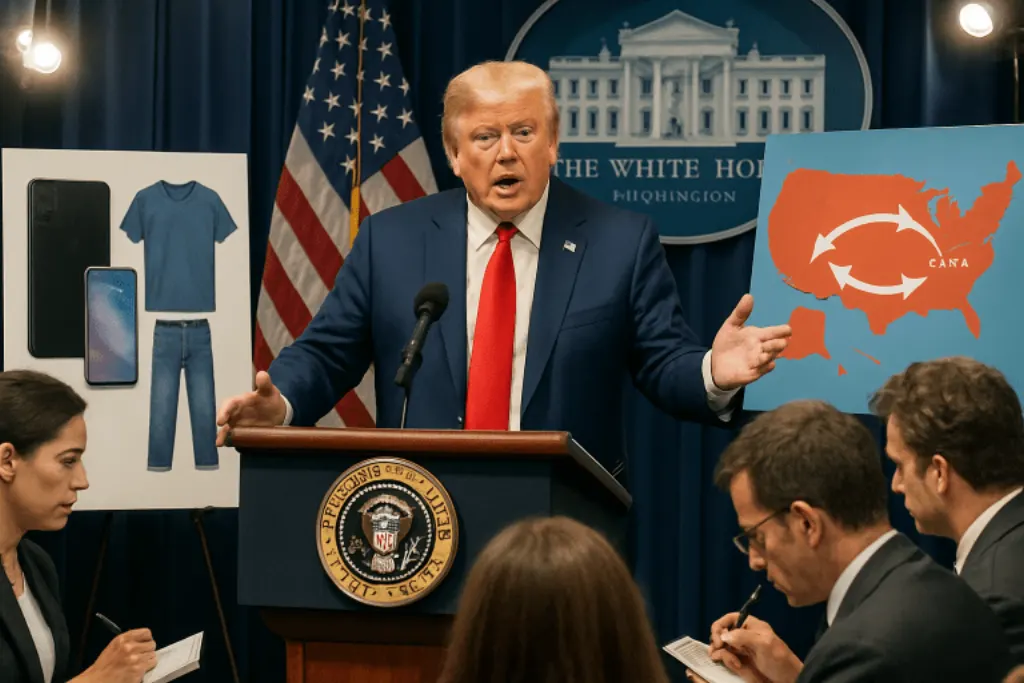
Trump closes loophole allowing US consumers to buy Chinese goods without paying tariffs
President Donald Trump’s recent announcement has sent shockwaves through the e-commerce world. The president signed an e