Trump closes loophole allowing US consumers to buy Chinese goods without paying tariffs
Contents5
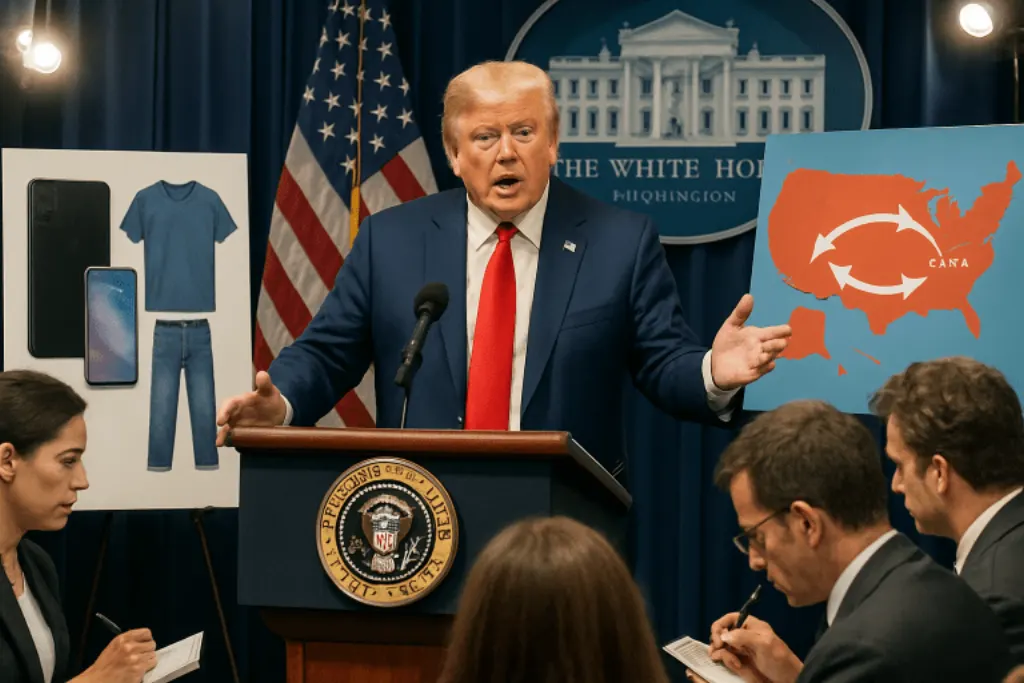
President Donald Trump’s recent announcement has sent shockwaves through the e-commerce world. The president signed an executive order ending a tariff exception that allowed American consumers to purchase Chinese products up to $800 free of charge. This decision, which will take effect on May 2, will have significant repercussions not only for consumers, but also for the companies that have made this model a pillar of their business strategy. Fans of platforms like Shein and Temu will be particularly impacted, as these companies took full advantage of this exception to flood the American market with low-cost products. At a time when trade tensions are already palpable, this initiative could well redraw the contours of global trade.
Related reading : US ends duty-free parcels amid boom in online commerce
Related reading : Consumers are in for a surprise: the imminent removal of the tariff exemption on goods…
The origins of the tariff loophole
The tariff loophole in question stems from a US law allowing the importation of low-value packages duty-free. Introduced in the late 1980s, this measure aimed to simplify trade logistics and reduce the administrative costs associated with small transactions. However, in the era of e-commerce, this exception has become the springboard of choice for many international companies. Giants like Alibaba, Huawei, Xiaomi, Lenovo, and many others have taken advantage of this regulation to offer competitive products on the American market without facing the traditional barriers of customs duties.
This practice led to an exponential increase in international parcels crossing U.S. borders. It is estimated that approximately 1.4 billion small packages, equivalent to about four million per day, were shipped to the United States each year through this loophole. With a large proportion of shipments coming from China and Hong Kong, this commercial dynamic relied on the absence of import duties and customs controls. Consequently, many American companies felt disadvantaged in the face of competition they considered unfair.
Among the concerned economic players, American manufacturers often denounced the perverse effect of this exception. Textile manufacturers, for example, have long advocated for the end of this loophole, believing it harmed their domestic operations. To better understand the impact of this decision, let’s consider the perspective of commercial groups previously deprived of customs protection. Their central argument is based on the loss of competitiveness caused by cheap international products, making it difficult to maintain profitable local production. https://www.youtube.com/watch?v=dFLVIz0NWGQ
Impact on e-commerce
The impact of closing this customs loophole will be felt on several levels. E-commerce companies, which have flourished thanks to this distribution model, will have to adapt their strategies to continue to attract the American market. For those whose core offerings rely on low-value-added products, the road ahead is fraught with pitfalls.
In the current economic climate, where every dollar counts, the implementation of this new customs measure raises serious concerns. The fear is that the additional customs fees will increase the final cost for consumers, thus dampening their appetite for online purchases of imported products. Economic observers agree that Chinese products will no longer have the same competitive appeal. Consequently, this decision could well push companies to reconsider their presence in the American market. A report from the National Bureau of Economic Research revealed that American households could spend an additional $10.9 billion to $13 billion annually as a result of the elimination of this tariff exception. This increase in costs will, unsurprisingly, hit the lowest-income households first. Indeed, lower-income consumers have often preferred to buy affordable products online to maintain a balanced budget.
Discover how Trump closed a loophole that allowed American consumers to buy Chinese products tariff-free. An analysis of the economic impacts and consumer reactions to this decision.
The geopolitical repercussions of Trump’s decision

Related reading : Falling US demand for Shein and Temu after ‘de minimis’ trade loophole closed
China quickly responded to this announcement with a series of retaliatory measures, in turn targeting US exports. This decision raises important questions about the future of bilateral relations and the consequences for industries. Technology sectors, already under pressure, fear a tightening of trade. Companies like Sany and other Chinese manufacturers could see their import costs increase, making access to the US market more complex.
To better understand the scope of these changes, let’s look at the potential impact on some major Asian players. With millions of products shipped daily, telecommunications companies like Huawei and ZTE, already subject to restrictions, could see their positions weakened in the US market. Furthermore, emerging brands, such as Oppo, could find it difficult to penetrate a more regulated market.
Company
Products Affected
The Perspective of American Businesses
The National Council of Textile Organizations welcomes this change. « We have always believed that this exception is unfair to American manufacturers, » says Kimberly Glas, president of the organization. However, she concedes that implementing the new rules will require time and resources to ensure that customs infrastructure can handle these new flows. Aware that the application of these tariffs could lead to negative reactions from consumers, Trump has attempted to reassure consumers by explaining that this measure is necessary to « protect American jobs. » However, others have denounced this measure as a potential drag on an already struggling economy, suggesting that the impact could be felt more harshly by households as the price of everyday goods increases.
Trump closes a loophole allowing American consumers to buy Chinese products without paying customs duties, leading to significant changes in trans-Pacific trade and the US economy. Discover the consequences of this decision on imports and American purchasing power.
The Trump administration’s stated plan is to strengthen a local economy facing multiple challenges while addressing national security concerns. However, this change of direction will seem like a double-edged sword for many, especially for those whose purchasing power will inevitably decline.
An Inevitable Restructuring of Global Trade

As trade policies adjust, crucial questions emerge. How will the global market adapt? What other players will emerge to fill the gaps potentially created by the absence of cheap Chinese products? Already, we can observe a resurgence of initiatives aimed at reducing dependence on a single economy, with countries increasingly turning to regionalized supply chains.
In this quest for economic stabilization, how this will affect not only bilateral trade, but especially consumers and small businesses, remains an open question. As companies reconfigure their trade networks, they must also rethink their supply chains to address future challenges.
In short, these policy adjustments reflect a significant shift, prompting both companies and governments to reevaluate their trade strategies. Often seen as a dual mandate for industry protection and national security, these new guidelines are forcing brands to redefine their sourcing strategies to align with the new global economic landscape. https://www.lemonde.fr/economie/article/2025/02/14/donald-trump-fait-fi-des-regles-de-l-omc-en-imposant-des-droits-de-douane-reciproques_6545999_3234.html
Read next
 E-commerce news
Shares of Chinese e-commerce firms plummet as trade loophole closes
The collapse of e-commerce stocks in China reveals a complex and tense economic situation. Faced with a series of domest
 E-commerce news
Trump’s tariffs test Chinese e-commerce giants
US President Donald Trump's recent decision to tighten tariffs on Chinese imports has caused a stir in the global e-comm
 E-commerce news
Trump’s Tariffs Push Chinese E-Commerce Giants to Expand Beyond the United States
The modern era of international trade is marked by economic upheavals that are redefining the strategies of Chinese e-co
 E-commerce news
Chinese online sellers face upheaval after Trump tariffs reversed
Global e-commerce is booming, with the growing influence of Chinese online sellers redefining the retail landscape. e-co