Will Carvana become the leader in automotive e-commerce as its adoption accelerates?
Contents4
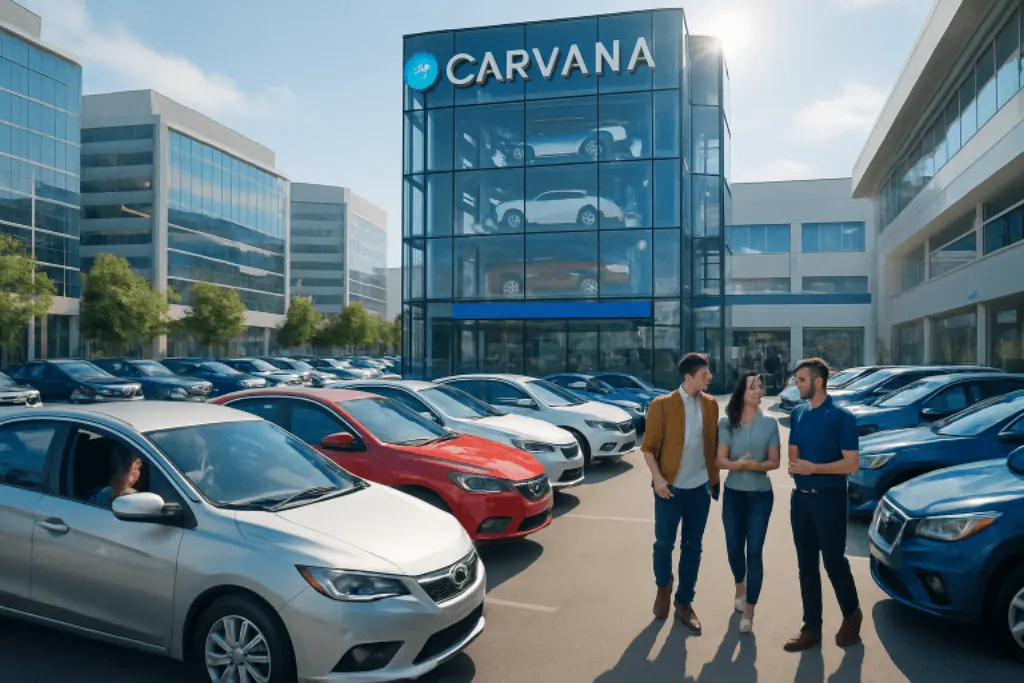
Since its inception, Carvana has established itself as a major player in automotive e-commerce, transforming the way consumers buy used cars. With the rapid adoption of digital technologies in this sector, the question arises: can Carvana become the undisputed leader in this market? This article explores the various aspects contributing to this promising market dynamic.
Related reading : Carvana, pioneer of automotive e-commerce, reaches milestone of 2 million cars sold
The Foundations of Carvana: A Bold Expansion into Automotive E-commerce
Carvana, often compared to the « Amazon of used cars, » has made its mark on the automotive industry with its innovative platform that allows consumers to buy and sell vehicles online. This approach, which prioritizes a seamless and stress-free user experience, is made possible by the company’s proprietary technology and vertically integrated model. Unlike traditional dealerships, this significantly reduces variable costs and delivers substantial customer value. By 2023, e-commerce will account for approximately 18% of transactions in the non-automotive sector, while the automotive retail sector remains behind. However, the growing comfort level among consumers in making high-value purchases online signals increased digital penetration in this area. **Carvana therefore sees a unique opportunity for sustained growth by leveraging its e-commerce and logistics infrastructure.**List of Carvana E-commerce Benefits:
Wide Vehicle Selection Competitive and Transparent Pricing Quality Assurance Through Rigorous Inspections
No-Pressure Experience
- Features
- Advantages Over Traditional Dealerships
- Vehicle Selection
- Expanded Choice Overall
Group 1 introduced AcceleRidein 2019, allowing consumers to purchase vehicles entirely online, from vehicle selection to finalizing financing, including home delivery options. Lithia Motors, for its part, is developing

, a digital platform giving users complete control over their car ownership journey.
Comparison of Automotive Sales Models: Company Sales Model Customer ApproachCarvana
100% Digital Simplification and transparency of the purchasing process Group 1 HybridIntegration of digital features
Lithia
Use within Carvana
Determine vehicle prices and adjust them in real time
Process Automation
Accelerate vehicle overhauls
- Data Analytics
- Make informed decisions based on market trends
- Carvana’s success depends on its ability to maintain innovation at the heart of its strategy, ensuring it remains at the forefront of technology, which allows it to reduce costs and increase customer satisfaction. Experts already see this company as a successful example that inspires other sectors to adopt similar innovations.
Find out if Carvana can become the leader in automotive e-commerce as its adoption continues to grow. Analyze market trends, innovations, and challenges.
Future Outlook: Shaping the Future of Automotive E-commerce
Carvana’s Reputation: Between Successes and Challenges

In 2025, Carvana must continue to address these challenges to ensure its sustainability and maintain investor confidence. Its efforts to reduce debt and increase operational efficiency are steps in the right direction, but hurdles remain.
Key Success Factors for Carvana:
Disciplined Cost Management
-
Continuous Technological Innovation
-
Flexibility in the Face of Fluctuating Economic Conditions
-
Transparent Communication with Shareholders
-
The lessons learned from previous years, detailed in various articles such as this one, offer promising avenues for the company. Despite the obstacles, Carvana’s potential to emerge as an industry leader remains rooted in its innovation and efficiency strategies.
https://blog.arcoptimizer.com/le-retour-de-carvana-passer-de-la-turbulence-au-triomphe
Read next
 E-commerce news
Carvana, pioneer of automotive e-commerce, reaches milestone of 2 million cars sold
Carvana, a true pioneer of innovation in the field ofautomotive e-commerce, continues to redefine the way consumers buy
 E-commerce news
Walmart’s move to the Nasdaq is part of an ambitious strategy to become a leader in AI and e-commerce, according to investors.
Walmart recently marked a major strategic turning point by transferring its listing from the New York Stock Exchange (NY
 E-commerce news
BTIG Confirme son Opinion d’Achat sur les Actions de Carvana Co. (CVNA
L’impact des recommandations d’analystes sur le marché boursier Les recommandations émises par des analystes financiers
 E-commerce news
Meesho, the Indian e-commerce firm, is seeing its quarterly losses soar as it accelerates its marketing campaigns
Meesho and the Evolution of its Quarterly Losses The Indian e-commerce company Meesho recently released a financial repo